Diagnosing Pneumatic Suspension Valves and Accumulator Failures
Adaptive air suspension systems depend on a closed network of valves, accumulators, height sensors, and a compressor that maintains target pressure in each corner. When one element in that network fails, symptoms often appear far from the root cause: the compressor runs constantly, one corner sags overnight, or the ride height warning illuminates without an obvious leak.
At pachycephal, pneumatic suspension diagnostics follow a pressure-first methodology. We measure what the system is doing before we replace what we suspect might be broken.
Initial Symptoms and Scan Data
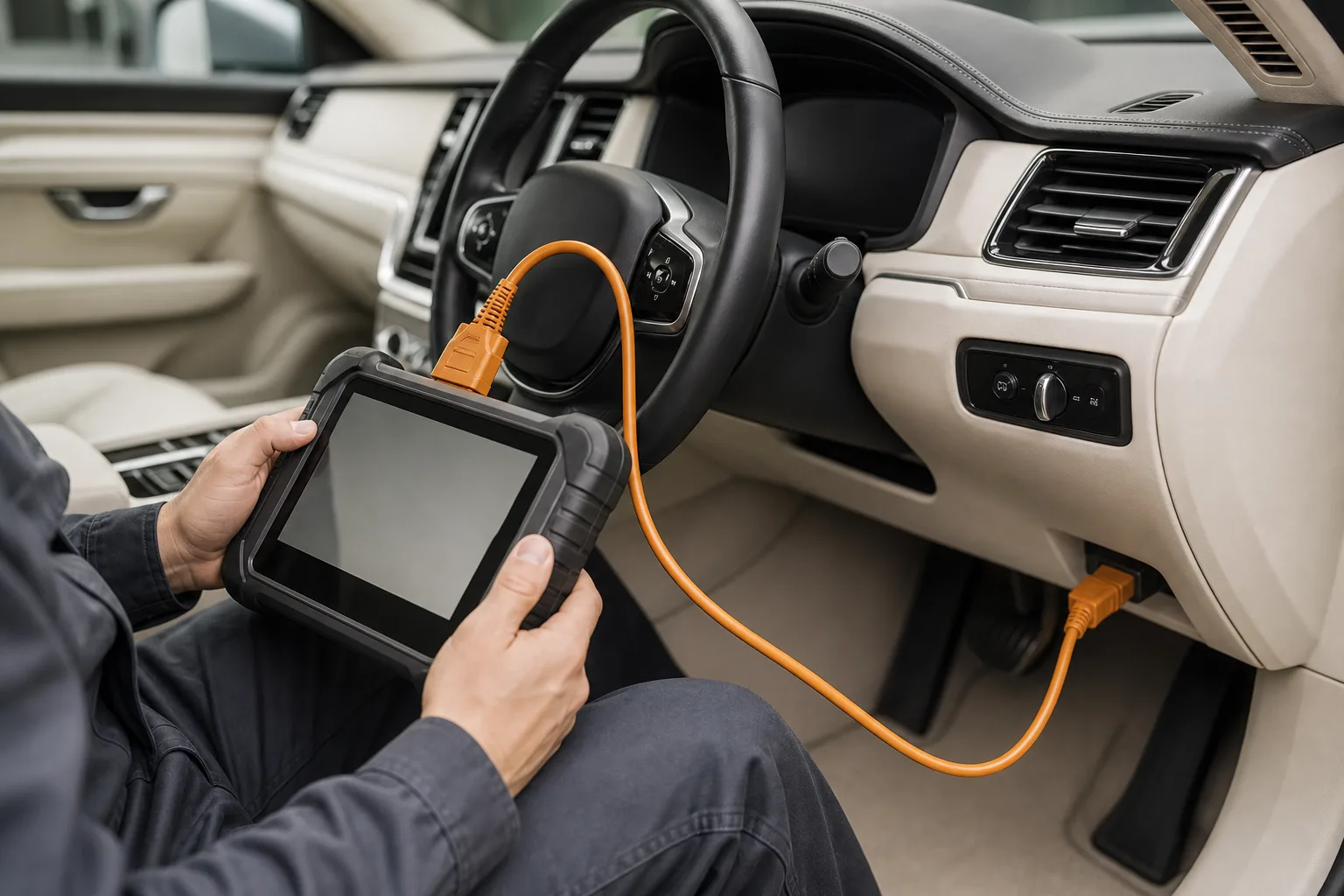
Clients typically report uneven stance, harsh transitions between ride modes, or a compressor that cycles more frequently than usual. We begin with a full system scan to capture stored and pending fault codes, current height sensor values, and compressor runtime counters where available.
Live data review often reveals a corner that reads within spec at idle but fails to hold target pressure under load. That pattern points toward a valve leak or accumulator that cannot maintain volume, rather than a failed height sensor.
Pressure Testing Methods
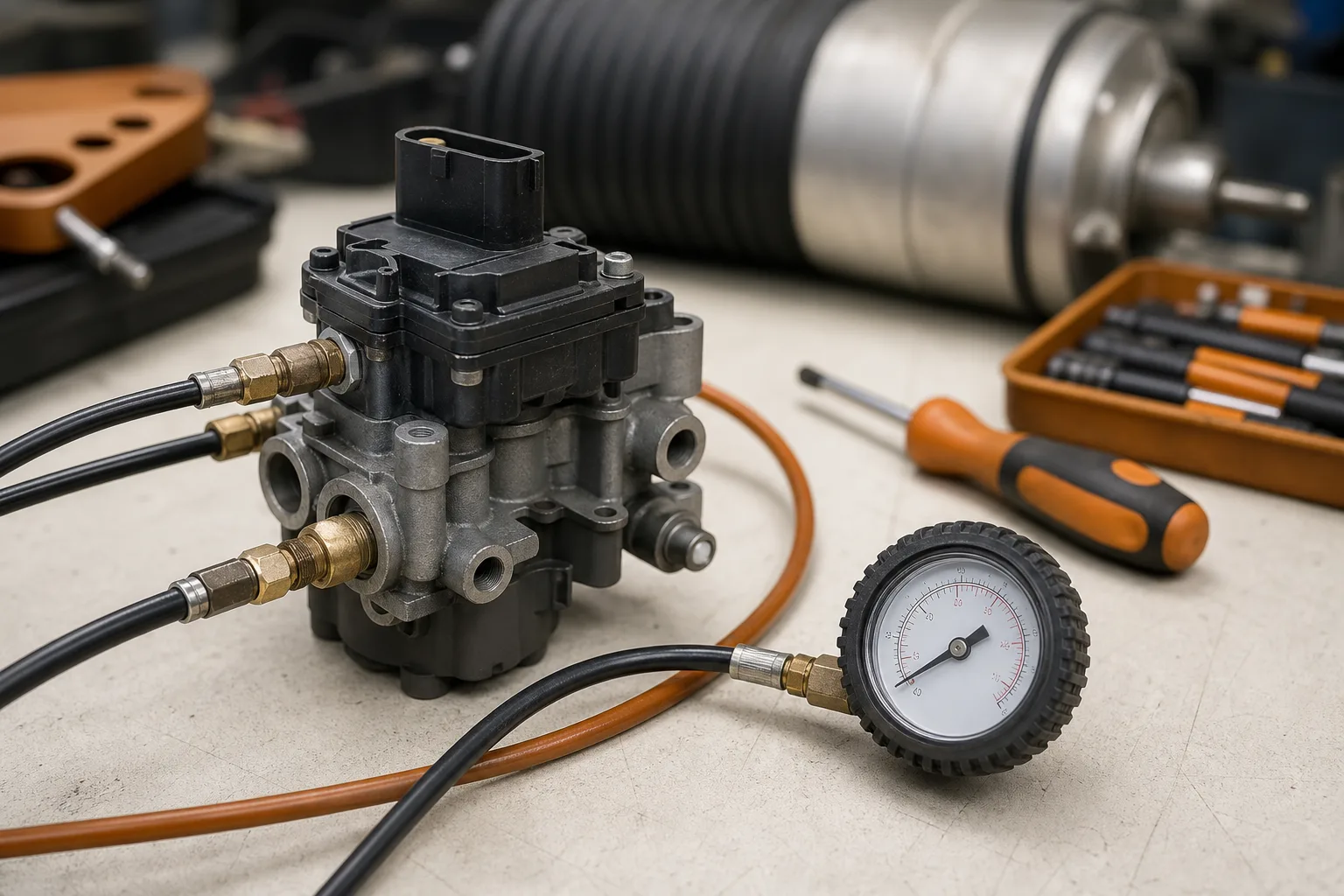
With the vehicle on a level surface and the system depressurized safely, we introduce regulated test pressure through service ports and monitor decay over timed intervals. Each corner is isolated in sequence so a leak in the rear left circuit does not mask a smaller leak elsewhere.
Soap solution and ultrasonic leak detection supplement gauge readings at fittings, line connections, and valve block interfaces. On many platforms, the valve block itself is the highest-failure junction because solenoid seals degrade from heat cycling and moisture ingress.
Accumulator and Valve Block Evaluation
Accumulators store pressurized volume to smooth compressor demand and maintain ride height during transient loads. When an accumulator diaphragm fails, pressure bleeds back through the valve block and the compressor compensates by running longer duty cycles.
We test accumulator integrity by comparing charge and hold times against manufacturer specifications. Valve blocks receive bench-level electrical testing of each solenoid circuit before any component is condemned, because wiring faults and connector corrosion mimic valve failure codes regularly.
Preventing Compressor Secondary Damage
A leaking valve left unaddressed forces the compressor to operate beyond its design duty cycle, which often leads to thermal shutdown or premature motor failure. Replacing the compressor without fixing upstream leaks guarantees a return visit within weeks.
Our repair recommendations always address the full leak path: valve, line, fitting, or accumulator. After component replacement, we perform a calibrated height adjustment and verify hold pressure over a minimum observation window before returning the vehicle.
When to Schedule Inspection
If your vehicle sits lower on one corner after standing overnight, if the compressor audibly runs after the engine is off, or if ride mode changes feel delayed, schedule a pneumatic system inspection before the compressor becomes a second repair item. Early valve intervention is almost always less invasive than replacing a burned-out compressor and drying out moisture-contaminated lines.