Systematic Fault Tracing for Cruise Control and Driver Assist Networks
Cruise control and adaptive driver assist functions share a signal chain that spans driver inputs, powertrain actuators, and network modules communicating over CAN or LIN buses. When engagement fails, owners often describe it as a single broken button. In practice, the system refuses to arm because one required input is missing, out of range, or inconsistent with other modules on the network.
At pachycephal, we trace cruise control faults by mapping the enable conditions for the specific platform, then testing each condition in isolation. Swapping parts before understanding the signal chain wastes time and money.
Understanding the Enable Chain
Most conventional cruise systems require vehicle speed above a minimum threshold, a valid brake switch release signal, closed throttle or steady pedal position, and no conflicting ABS or stability control intervention. Adaptive systems add radar or camera readiness states, steering torque limits, and following distance calibration.
Scan data lists which enable criteria are met and which are not. That list is the roadmap. If the brake switch reads applied while the pedal is released, the system will not arm regardless of switchgear condition on the steering wheel.
Throttle and Powertrain Inputs
Throttle position sensors and accelerator pedal modules provide the powertrain control module with driver intent. Cruise control compares commanded speed against actual speed and modulates throttle or engine torque accordingly. A noisy or dual-track inconsistent pedal signal can disable cruise as a safety precaution.
We graph pedal and throttle position against time during a road test or on the lift with wheels free. Dropouts, lag spikes, or mismatched dual tracks point toward sensor or wiring faults before we inspect the cruise control module itself.
Brake Switch and Clutch Inputs
Brake and clutch switches exist to disengage cruise immediately when the driver requests deceleration. A switch stuck in the applied state prevents arming. A switch that never transitions tells the system the driver is braking when they are not, which disables adaptive functions that depend on consistent state logic.
Bench testing switches with a multimeter confirms transition points and return spring integrity. On vehicles with brake pedal position sensors instead of simple switches, we verify calibrated ranges against factory specifications rather than assuming a binary on-off behavior.
Network Communication and Module Logic
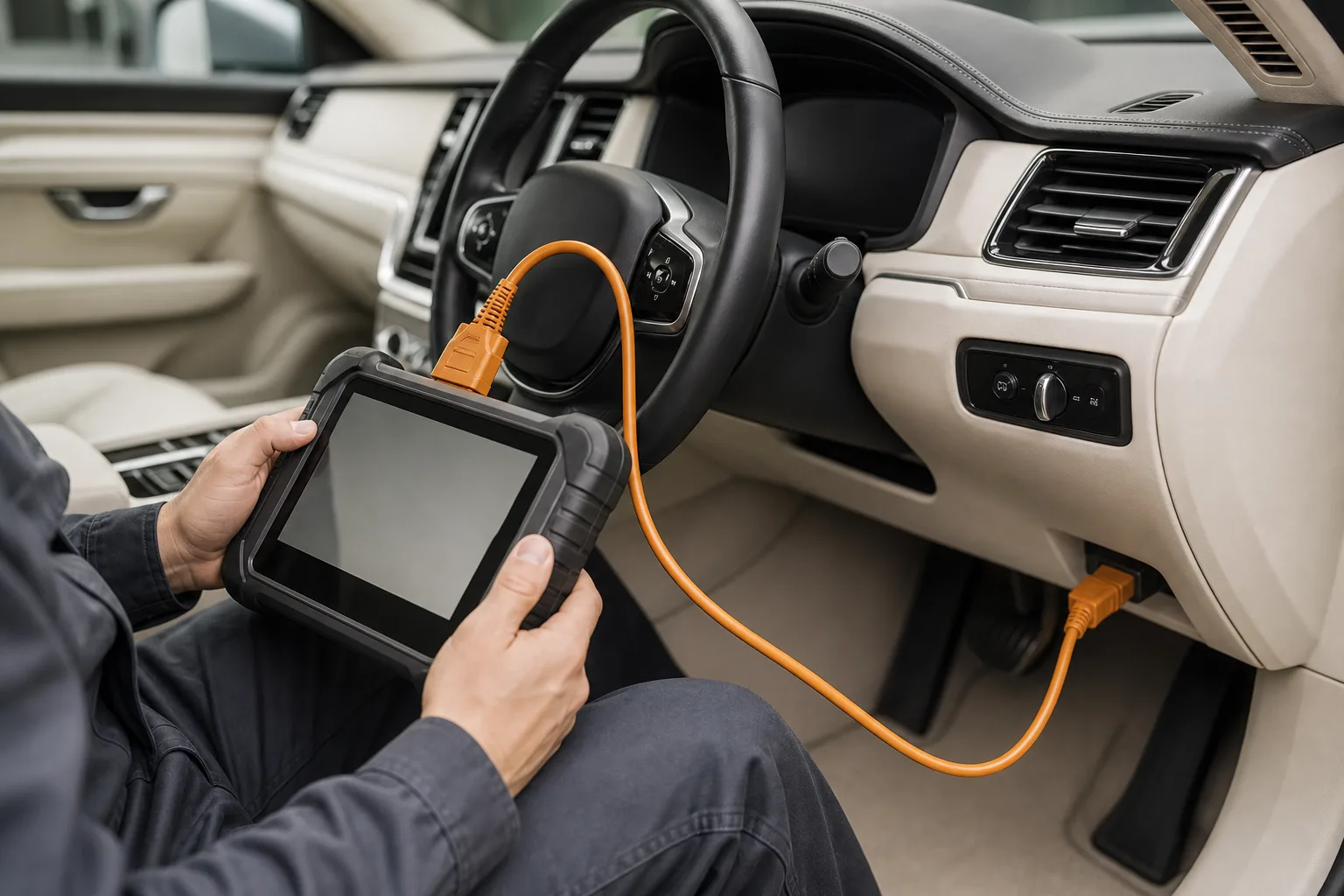
Modern cruise functions are distributed across multiple control units. A fault in the ABS module, steering angle sensor, or forward radar unit can inhibit cruise even when the driver interface appears functional. Network scan tools reveal communication timeouts and invalid data messages that pinpoint the refusing module.
We perform bidirectional tests where supported, commanding cruise functions through the scan tool while monitoring module responses. If the powertrain module receives a set command but does not actuate, the break in the chain is localized to that module or its actuator circuit rather than the steering wheel controls.
Why Isolated Testing Beats Component Swapping
Replacing the steering wheel switch assembly because cruise will not set is an expensive guess on most platforms. Isolated testing of enable inputs typically identifies a ten-dollar brake switch or a corroded connector pin in under an hour of structured diagnosis.
If your cruise control stopped engaging after a battery disconnect, warning light event, or minor brake service, bring those details to intake. Context often narrows the fault to a calibration or input state issue that systematic tracing resolves without unnecessary parts replacement.